Your Company Is Overpaying for AI by 80% — I Built a Live Simulator That Proves It
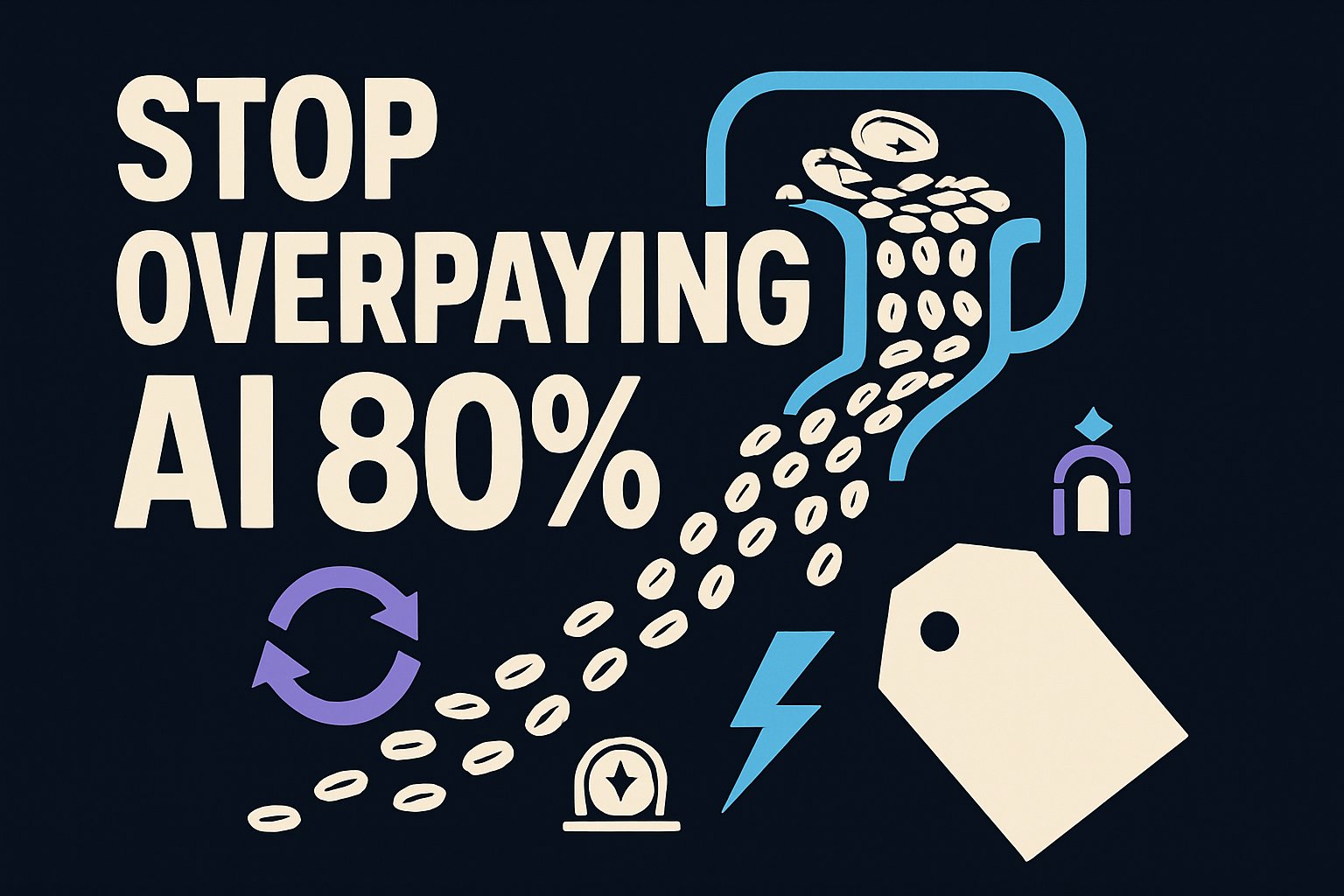
Most companies shipping AI features today are quietly running them at a loss. Not because the features are bad — because every request, from "what are your opening hours?" to a genuine reasoning task, gets sent to the most expensive frontier model in the catalog. I built a live, interactive cost simulator to make this failure mode visible — and the routing architecture that fixes it. You can run both in your browser, right now, in my Infrastructure Lab.
The deficit nobody itemizes
LLM spend hides because it scales with success. At 1,000 users the bill is a rounding error; at 100,000 it is a headcount; at a million it is the margin. And the brutal part: analysis of real production traffic consistently shows that a large majority of requests are repetitive or simple — greetings, rephrasings of questions already answered, lookups a cache should have caught. Paying frontier-model prices for those is not an AI cost. It is an architecture failure invoiced monthly.
The cascade: cache → flash → frontier
The fix I implement is a three-tier router, and its economics are the whole story:
- Tier 1 — semantic cache. Embed the query, search for a semantically equivalent past answer. A hit costs a vector lookup — effectively free — and returns in milliseconds. In repetitive domains like support, this tier alone absorbs a huge share of traffic.
- Tier 2 — flash-class model. Small, fast, and priced an order of magnitude below frontier. Classification, extraction, simple Q&A, formatting — the daily bread of production AI — lives here.
- Tier 3 — frontier model. Reserved for what actually needs it: multi-step reasoning, generation with high stakes, ambiguous judgment calls. A minority of traffic, now the only part of it paying premium prices.
In the simulator's modeled workload, cascading routing turns a heavily loss-making cost line into a sustainable one — an 80%+ reduction in the monthly deficit. Your mix will differ; the shape of the win will not.
FinOps for AI is not procurement. It is architecture. The bill is decided at the router, not at the negotiation table.
Why I built the simulator instead of writing a slide
Because claims are cheap and dashboards persuade. The FinOps Cost Simulator is a token-physics engine: drag the traffic mix, watch the cache-hit rate, flash share, and frontier share reprice the month in real time. Next to it sits a chaos toggle that injects synthetic latency and 504s, because a router that saves money but can't survive a gateway timeout is still a liability — cost governance and resiliency are one discipline, not two.
What I'd do inside your company
Week one: instrument — you cannot route traffic you haven't classified. Week two: stand up the semantic cache on the highest-volume surface and measure the hit rate. Weeks three and four: introduce the flash tier behind a router with confidence thresholds and an escalation path, so quality is protected while cost falls. The pattern is the same one running in my products; the only variable is your traffic mix.