Hire My Head, Not My Hands: What 5 Solo Products Prove That a Résumé Can't
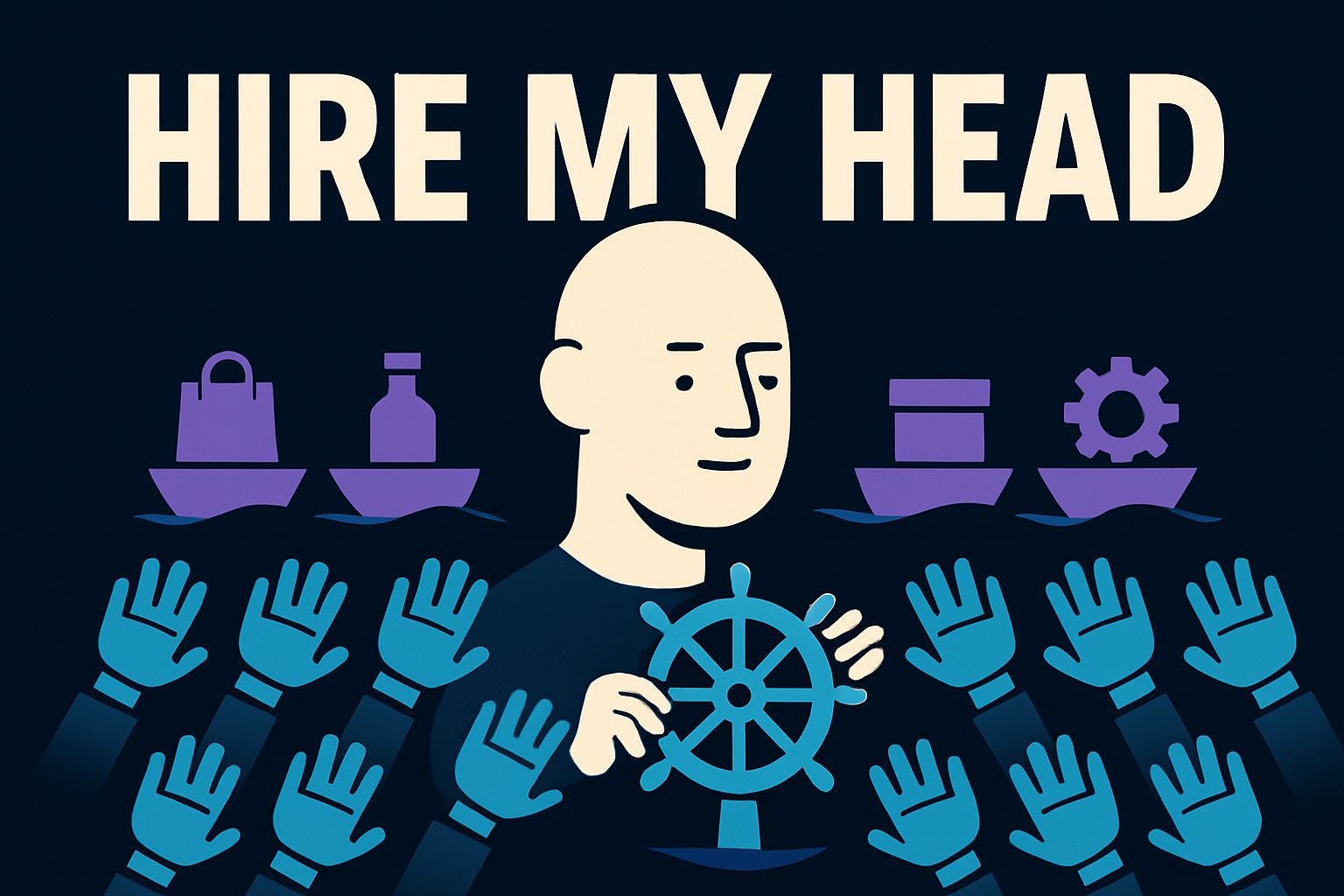
Most engineering résumés are inventories of hands: languages typed, frameworks used, years accumulated. But hands are exactly what AI just made abundant. What remains scarce — what was always scarce — is the head: the ability to see a whole system before it exists, price its trade-offs, and refuse the failures in advance. This post is the closing argument of my Founder's Log series, and it is addressed directly to the person deciding whether to interview me.
What the evidence shows
Everything claimed on this site is deployed and inspectable. Five products built solo — each one embodying a different architectural judgment call. A Rust cockpit that chose native weight over Electron convenience because the user's machine was the constraint. A finance agent that made the AI structurally unable to touch the money. A workflow engine that cut payloads 94% by refusing to persist the view. Two autonomous pipelines that run my content and my networking on $0 of infrastructure. Plus this site itself: a static-exported Next.js app with a grounded RAG concierge, a live FinOps simulator, and an entity-graph SEO layer designed for the AI crawlers that now read the web.
The pattern underneath the products
- I find the governing constraint — frame rate, trust, cost, consistency — and architect around it, not around the fashionable stack.
- I build systems that work while I sleep. Pipelines with human-curated queues and machine-owned execution. That instinct — automate the cadence, keep the judgment — is precisely what companies need as they adopt AI.
- I treat AI as a workforce with a constitution. Claude and MCP give me squad-level throughput, but every system has hard boundaries the model cannot cross. Leverage without authority.
- I ship, then I write. Eighty-plus articles on this site document the thinking behind the code — because an architect who can't transfer understanding is a bus-factor of one.
The question in 2026 is not "can this engineer build it?" — the model guarantees a version of it gets built. The question is: "will this engineer make the three or four decisions that determine whether it survives contact with production, users, and the invoice?"
What I'm looking for
A team where the hard problems are architectural: AI systems that need trust boundaries, infrastructure that needs its economics fixed, products that need to feel instant at scale. Lead or senior full-stack / AI engineering roles, remote-first from Hyderabad, effective across time zones — my work is asynchronous by construction, as the pipelines prove.
The fastest way to evaluate me is to use the site the way an engineer would: interrogate the RAG concierge, break the chaos-engineering sandbox, read a product teardown, and check the interview brief built for engineering leadership. Then start the conversation — the vision comes with references, and all of them are running in production.