I Shipped 5 Products in 12 Months — Solo, Unfunded, and Faster Than Most Teams Ship One
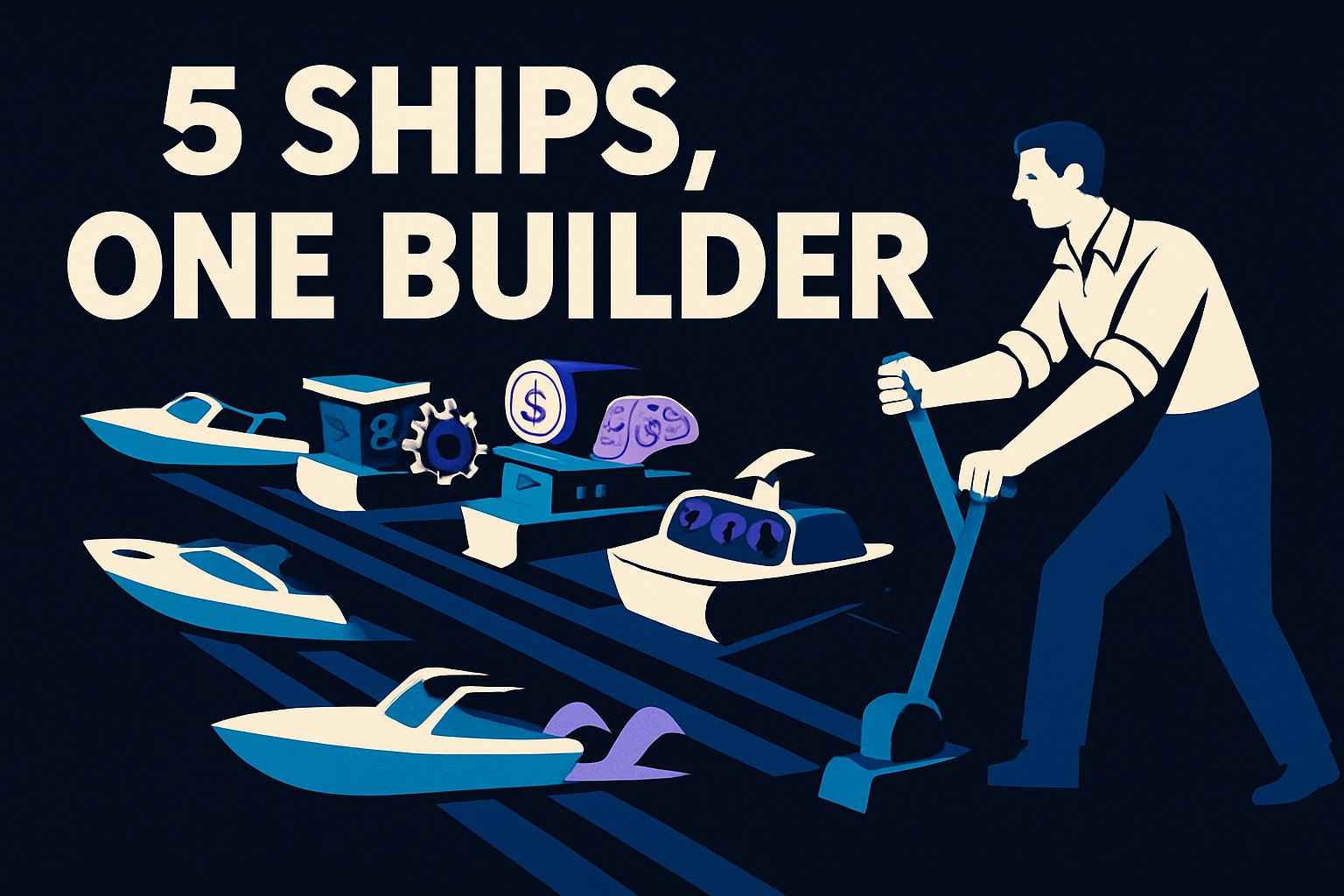
In the last twelve months I designed, built, and shipped five production products — a Rust desktop cockpit, a node-based workflow engine, a local-first AI finance agent, an autonomous content pipeline, and a LinkedIn outreach machine. No team. No funding. No standups. Every architecture decision, every line of infrastructure, every product call came from one place: my own head.
This post is not a humble-brag. It is a thesis about how software gets built now — and what a company actually buys when it hires an engineer who has done this.
The portfolio, in one table
- streamerOS — a Rust + Tauri desktop cockpit for streamers: live system telemetry, multi-platform chat velocity, and automated OBS scene control, rendering at 60fps on a fraction of Electron's memory.
- IntegrateX — a React Flow workflow-automation canvas whose custom serialization adapter cut graph payloads by 94%, making save/load feel instant.
- Sable — a local-first AI financial agent. All data lives on-device in SQLite; the model proposes, a human confirms, and nothing financial ever leaves the phone.
- The Zero-Cost AI Blog Writer — a pipeline that drafts, commits, and deploys technical articles on a cron schedule for exactly $0 of infrastructure.
- The LinkedIn Pipeline — an autonomous system that turns my shipped work into scheduled LinkedIn content and grew my professional network while I slept.
What "solo" actually means
Solo does not mean I typed every character by hand like it's 2015. It means every decision was mine: the data model, the trust boundaries, the failure modes, the economics. I use Claude as a workforce and MCP as the wiring between it and my systems — but AI is leverage, not vision. A model can generate a component; it cannot decide that a finance app should never let the model touch the money, or that a streaming cockpit should be written in Rust because streamers run OBS, a game, and an encoder on the same machine. Those calls are the product. The rest is throughput.
The scarce skill in 2026 is not writing code. It is holding an entire product in your head — data flow, trust boundaries, unit economics — clearly enough that the code becomes an output, not a struggle.
The compounding trick: products that work for you
The pattern across all five products is that each one removed a job from my life. The blog writer removed content production. The LinkedIn pipeline removed outreach. Sable removed money anxiety. streamerOS removed the four-apps-and-a-prayer streaming setup. I did not build demos — I built employees, and they have been on shift ever since. That is the mindset I bring to a company: look at the recurring work, ask which of it deserves a human, and ship a system for the rest.
What this proves to an employer
A candidate who has shipped five products alone has, by construction, done the job of a product manager, a backend engineer, a frontend engineer, a DevOps engineer, and a QA function — and paid the price for every mistake personally. There is no diffusion of responsibility in a team of one. When I say I understand systems end-to-end, the evidence is deployed, running, and documented across this site — every product has a full architecture breakdown in the products section.
The next nine posts in this series each take one of these systems — or one of the operating principles behind them — and show exactly how it was built, why it was built that way, and what the same thinking would do inside your company.